Breed Info
The Tamaskan
The Tamaskan is a rare breed originating from Finland. Highly versatile with sled-dog origins, the modern Tamaskan Dog is suited to a wide range of activities, including sled‑dog sports, agility, and obedience. Tamaskan Dogs are bred to physically resemble wolves, without the behavioral traits of true wolfdogs. Although most Tamaskan contain low levels of wolf ancestry (roughly 0–30%, often <10%), they are generally considered friendly, social, and outgoing, avoiding the aggression or extreme shyness often linked to true wolfdogs.
The Tamaskan is still considered to be “under development,” and due to its limited gene pool, the Tamaskan has an open studbook policy whereby unrelated outcross dogs are occasionally added to the breeding program in order to increase genetic diversity within the breed. Tamaskan breeders must adhere to strict guidelines with regards to health, temperament and appearance.
The Breed Standard
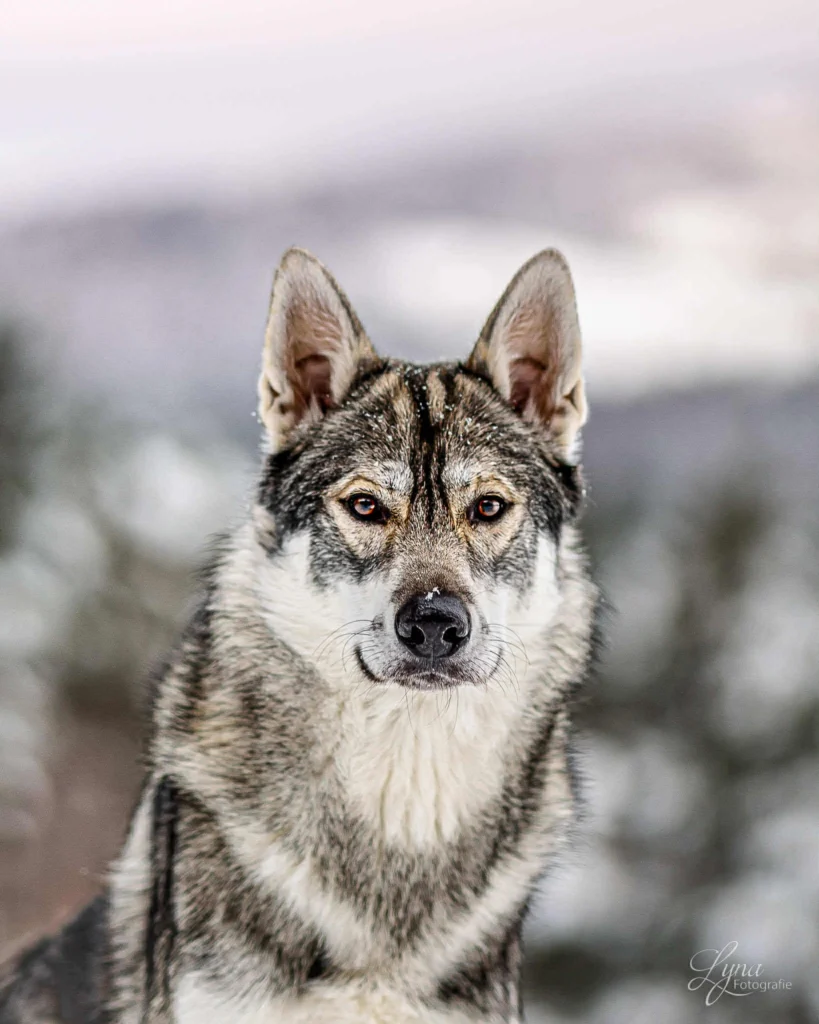
General Description: The Tamaskan Dog is a large sized dog with an intelligent gaze who is rangy and wolf-like in appearance bearing witness to his northern heritage of sled dog type. He is a well-balanced working dog, quick and light on his feet and free and graceful in action. He has a well-furred body, erect ears, and bottle-brush shaped tail.
The Tamaskan stands well over the pads; this stance gives the appearance of readiness for activity and a proud carriage, with head erect and eyes alert showing interest and curiosity. His characteristic gait is smooth and effortless, showing good forward reach and rear extension. He is a capable and adaptable worker, able to function as sled dog, service dog, or tracking dog, among other roles. He can easily carry a light load at a moderate speed over short distances.
Registries
There are currently five official Tamaskan Dog registries worldwide who enforce breeding standards, ethics, and actively forward the well-being of the breed:
The registries named above are tightly governed, and should not be confused with a few “homegrown,” single-entity names which have unfortunately sprung up in light of the breed’s popularity and scarcity.